Showing posts with label economic misery crime control unemployment. Show all posts

Sunday, December 7, 2008

Massive job losses since September 2008, Portends crime wave by September 2009

This morning I write about bleak times now for the broad economy, and bleaker times ahead -- unless you are in the business of security which will experience boom time conditions by Q3 2009. A rise in property and violent crime is forthcoming if current trends persist: shoplifting, burglaries, robbery, intimidation, extortion, kidnapping, robbery, arson, or worse. The history of severe economic negative economic shocks show a crime wave following within one year.

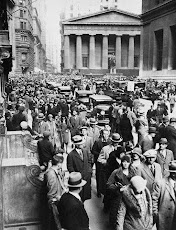
The US economy is in an economic death spiral of sorts with real estate, equities, commodities, business investment, and employment heading downwards fast. The animal spirits that encouraged investors of times past to invest in equities and bonds are in retreat and seeking to hold treasuries and cash. Indeed, holding cash today is viewed as a store of value as assets are rapidly losing their store of value -- homes, cars, assets, and commodities have retreated in value. Without a sizable exogenous event, within one year, indeed by Septembers' end 2009, there will be a widely recognizable, and vicious crime wave that hits this country the likes that have not been seen since the great depression. In that day, a man will set a tool down, and it will be gone.

Statistically speaking, for every rise in the unemployment rate you will notice a multiplied increase in the local property crime rate between 1.4x to 2.6.x depending on the local geography, population density, and job opportunity climate. These figures are taken from years of individual and time series data research conducted by economists and criminologists that examined the impact of rising unemployment on crime rates. One can only imagine what it must have been like living through the first great depression with unemployment rates of 24%.

Now I don't expect (or care) if anybody necessarily agrees with me -- the facts will speak for themselves. But I do hope that you will prepare yourselves for more difficult times ahead. Unfortunately for us all, time and the consequence of actions taken to date, and the downward trend are in my forecasting favor. I am putting this out now so that everyone can wake up and understand that we need to address the serious question of unemployment, loss of household income, and lack of access to capital (in homes that are depreciating monthly). Without income, people make up the difference by other means. The question is this -- how quickly do you take heed to this forecast? how will you prepare? what can you do now to make yourself much less a 'victim' or target of crime opportunity?

The economy fell off a financial cliff with the siemic event of 9/15/08 and the Lehman Brothers bankruptcy and the subsequent market events that followed. Commercial lending has literally ground to a halt, businesses have contracted spending, consumers have covered their wallets and pulled back from large purchases, and unemployment has spiked -- and this condition is not likely to turn around for many months. President Elect Obama's New Deal broadbased jobs based employment plan as announced will not cover the enormity of the jobs lost at current forecast. More creative thinking must emerge.

Leading off the front page of the New York Times on December 5, 2008, is a headline that reads -- U.S. Loses 533,000 Jobs in Biggest Drop Since 1974 . "The nation’s employers cut 533,000 jobs in November, the Bureau of Labor Statistics reported Friday. Not since December 1974, toward the end of a severe recession, have so many jobs disappeared in a single month — and the current recession, far from ending, appears to be just gathering steam." Most importantly, a total of 1.9 million jobs have been lost since December 2008, the start of the deep recession and two-thirds of these loses have occured since September 2009. This trend will continue for the foreseeable future of months and several quarters. The NY Times articles goes on to post - "More significantly, the unemployment rate does not include those too discouraged to look for work any longer or those working fewer hours than they would like. Add those people to the roster of the unemployed, and the rate hit a record 12.5 percent in November, up 1.5 percentage points since September. "

http://www.nytimes.com/2008/12/06/business/economy/06jobs.html

The chorus call asking if we are going to have a crime wave has began. Today's article of interest has the heading, "Now that the recession is official, is a crime wave coming?" http://www.daily-journal.com/archives/dj/display.php?id=432114 The article provides the following comments -- "Richard Rosenfeld is a professor of criminology and criminal justice at the University of Missouri-St. Louis. He believes it is inevitable -- no matter where you live. "My research has shown that crime rates tend to rise when consumers become pessimistic. Why? Economic theory predicts that people weigh the costs and benefits of law-abiding versus criminal behavior," he recently wrote. "Like it or not, a failing economy increases the temptation." And Rosenfeld added, "Worried consumers do not necessarily resort to street crime. But some will resort to buying stolen goods when they can no longer afford the prices at Target or Wal-Mart. As that demand increases, so does the incentive for the street criminals who supply underground markets."

It's time to prepare. In pioneer times they would circle the wagons to protect themselves. What is the equivalent of circled wagons today? More on this in coming blogs.

Tuesday, November 11, 2008

Falling off a bridge - by Ilene Dover, and search for a softer landing

This humorous children’s pun is riddled with satirical undertones of the current financial market and rapidly rising unemployment. The economy has indeed fallen off a bridge or cliff, and we have hope of a soft landing but there may be more rocks below. One of the primary reasons for our market collapse is the collective action of individuals and organizations who leaned over, whether it was credit liens, overreliance on cheap money, search for the next bubble, or jumping out of the market in an attempt to preserve capital, halting capital spending, curtailing credit extensions -- the collective action is a free fall for all.

Everyone is focused on self-preservation. Just two months into TARP, and the needs for TARP are greatly stretched – I hope the TARP is elastic as it might unravel. I find it more than ironic that the financial market prognosticators somehow think that the financial markets are more important than the real economy (e.g., strategic economic industries such as automotive, industry, infrastructure, etc), particularly where jobs are concerned. Ironically, banks can be nationalized far more easily than industries particularly when what is needed is economic backing, market confidence, and liquidity. Whereas nationalizing industries becomes more problematic in terms of nationalized industries being market responsive in terms of innovation, productivity, output, and inventory control -- and contrary to Say's Law, automobile supply does not create its own demand in today's environment. Preserving strategic industries, transforming industries, and forging new economies and by reference jobs are a vital requirement for the next administration.

Beyond supporting or retooling legacy industries, a new Congress and president might look to the past for guidance --- Consider the power and value of National Science Policy Goals -- it is frequently quoted that the initial funds spent on NASA to put a man on the moon returned 7:1 benefit for the economy in terms of jobs and economic stimulus. What other mutually beneficial science policy goals could be invested in with a 7:1 benefit or greater? Be it energy, environment, medicine, or transportation in terms of new bridges and roads? Regardless of the X factor multiple put on spending, there will be some left out of the jobs equation as their skills are not sufficient or no longer needed in the future economy. Significant investment in education and job re-training with real jobs at the end of course completion need to materialize in the coming plan.

Beyond transformational investment, there will be a need for additional jobs and criminal diversion programs. Many historical economists incorrectly look back on the Great Depression as a time when crime diminished statistically, and somehow they pass early judgment that there will be no spike in crime with a 2nd Great Depression (where we are headed). What is frequently missed in their analysis is the fact that the US government was heavily involved in one of the greatest crime control diversion programs during the great Depression where the government extracted unemployed, poor, inner city young men and placed them in distributed work camps called the CCC or Conservative Conservation Corps. Touted publicly as a jobs program for the economy, the real underbelly of the program served a crime control purpose to remove likely offenders and thereby reduce crime opportunity by providing work for the young male population at greatest risk for crime involvement.

From J A Pandiani's (1978), Crime Control Corps - An Invisible New Deal Program , "The extreme economic hardship and social dislocation of the Great Depression were widely expected to produce a crime wave of major proportions. From the mid-1920's until 1933, crime rates rose, but then the trend mysteriously reversed itself. Between 1933 and 1941, large numbers of poor young men were institutionalized in work camps far from population centers as part of the CCC relief program. They were thereby effectively removed from the crime-committing population. The crime control function of the CCC was probably intended, but remained unrecognized by the public. The expressed purpose of the program was to provide economic relief for enrollees and their dependents and to perform various conservation projects, such as flood control and reforestation. At its peak in 1935, CCC operated 2,650 camps with a total enrollment of over 500,000 men. Thus, it appears that from 1932 to 1940 between one-quarter and one-third of the Nation's poor young men were in the CCC. This failure to recognize the important social control function as well as the program's overall success must be attributed to its striking correspondence with American values and traditions surrounding free enterprise. "

As one looks more deeply into the underlying economic conditions of the current market collapse and the portended increased storm of economic misery, associated unemployment, and crime opportunity, there will be a need for preparation of a thoughtful crime control strategy to work alongside the other financial plans. To this end, this blog is dedicated – to focus rhetoric on the baneful economic consequences of the current situation, highlight likely future courses of market direction, and proactive solutions that might be recommended to create a softer landing, and avoid the rocks below.