Thursday, April 29, 2010

Crime Wave Alert - Atlanta GA - Campus Concerns

Typically, the tipping point of recognition of a crime wave is some heinous incident. Such was the case this past Sunday in Atlanta.

In announcing the new offensive to bolster campus security, Atlanta Police Department acknowledged a singular incident raised consensus for need; last Sunday night four students were carjacked and kidnapped a block away from the Morehouse campus. The youths were able to call 911 on a cell phone and were rescued by police.

The Atlanta Constitution Reported that, "The plan was formalized Tuesday on Georgia Tech's campus, which has been plagued by a series of robberies dating back to May, when a student was shot at a parking deck on Northside Drive and Tenth Street. Last week, there were three incidents reported in which Tech students were robbed either on campus or a short distance from the school." "This is the second major APD initiative on campus crime in the last six months. Last fall then-Police Chief Richard Pennington announced the department would dispatch eight uniformed officers to keep watch over the neighborhoods near Tech and the Atlanta University Center. But Turner said those increased patrols dwindled once the revenue source for overtime pay dried up."


Monday, April 26, 2010

Crime Wave Alert - Chicago violent crime on the rise, appeals for national guard to assist

CNN reported on April 26, 2010, that a "violent crime wave in Chicago" has prompted calls for the National Guard to step in. Two Illinois law makers are urging IL State Governor Pat Quinn to deploy troops following a recent surge in violent crime. Unfortunately, the National Guard, outside of Military Police, are not trained for doing police work -- they are not versed in domestic law enforcement, and are not a good fit. Yet it is interesting to observe that for all the publicly voiced opinions that no crime wave exists, that there are some experiencing acute pain from this economic downturn that they attribute to the conditions giving rise to a crime wave.

Read the article below. The comments on the CNN web link are also revealing in terms of capturing attitudes about the crime situation in Chicago.


April 26, 2010
Posted: 09:15 AM ET

A violent crime wave in Chicago prompts a call for the National Guard to step in. Two Illinois lawmakers, State Reprepresentatives John Fritchey (D) and LaShawn Ford (D), are urging Governor Pat Quinn to deploy troops following a recent surge in violent crime. "We're not talking about rolling tanks down the street," said Fritchey. "If we bring them in to fill sand bags and pick up tornado debris, we can bring them in to save lives."

While they may believe the Guard is the solution, Chicago Police Supt. Jody Weis disagrees. Weis says the Guard's military training falls short of the criminal laws and procedures that police must follow in combating crime. “I’m not that mixing the National Guard with local law enforcement is the solution," Weis said.

We want to hear from you. Tell us whether you think the National Guard should be called in to help combat the city’s recent crime wave.

Leave us a comment. We’ll share some of them on air in the CNN Newsroom, 11am – 1pm ET

Friday, April 16, 2010

Crime Wave Alert - Honduras - civil unrest, massive peasant squatters movement

In Honduras, government leaders are calling it a crime wave, and are planning to use the military to put down crime wave, that peasant leaders fear will include an assault on peasant squatters that have seized over 10,000 acres of farmland from large corporate owners.


"Zelaya's supporters expressed fear the security buildup might be used in a crackdown on a peasant squatter movement in the area. Just before the coup, about 3,000 farm workers seized almost 10,000 acres (4,000 hectares) in commercial plantations used to grow African palms. The pro-Zelaya National Popular Resistance Front said the Aguan deployment posed a serious threat of raids to clear the squatters."


The AP Press reported that "Troops will be sent into Honduras' streets to help police combat a wave of violent crime, the government said Tuesday. Defense Minister Marlon Pascua told reporters that soldiers will be assigned to search vehicles and pedestrians and pursue criminal suspects. He did not specify when the troops would be deployed."


This Central American country of 7.7 million people suffered more than 5,300 homicides in 2009 while grappling with a political crisis touched off by a coup. The country's army was harshly criticized after soldiers hustled then-President Manuel Zelaya out of the country aboard an airplane last June. All six members of the military's Joint Chiefs of Staff were charged with abuse of power in January, but all were later cleared by a Supreme Court judge. Lawmakers approved amnesty for both Zelaya and all those involved in his removal. On Monday, Lobo's administration announced it was sending more than 2,000 soldiers and police officers to the Atlantic coast region around the Aguan River to seize drugs and illegal weapons. Drug cartels are increasingly using the coasts of Central America to move drugs toward the U.S. market.


Read more: http://www.macon.com/2010/04/13/1093389/honduran-army-to-help-combat-violent.html#ixzz0lGkPC9T1


Tuesday, April 13, 2010

Crime wave in New Haven: murder on the rise


What will the crime wave look like when it arrives? This is a question that researchers and watchers are asking. Criminal justice scholars are pleased with their observation that "no crime" wave has occurred, and that somehow this time is different. City leaders in New Haven are not so sure, as they are experiencing rapidly increasing violence in the past four months, with 17 homicides so far this year.

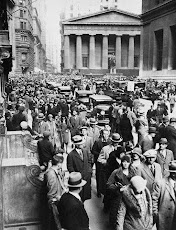
Despite the well intended scholars, or the hopeful politicians, this time is not different -- we will not avoid a crime wave -- rather it will get a lot worse before it gets better as we went so much further down the economic roller coaster, and we have yet to pull up. Furthermore, it is dangerous anytime someone suggests that somehow this time is different. This logic allows city officials to lay-off police at the same time that the conditions for crime are brewing. It must be remembered that it was not until 1933, some four years after the 1929 stock market crash, that the public was so greatly outraged by crime that something was done about it. Murder, extortion, kidnapping, racketeering, bank robberies, and many other crimes were the seminal markers of crime wave during the Great Depression era.

Consider now what is happening in our nations cities. Each is different, unique, and yet all are suffering from new conditions. The streets are getting meaner. Consider the recent press conference held Monday (yesterday) that marked the first time city leaders have spoken publicly to discuss the crime wave, responding to the continuing violence and rising anxiety in the city. New Haven Police Department Chief Frank Limon, who was sworn in just last week, said he will work on strategies for his “Operation Corridor” policing campaign, which was just launched this weekend and increased police presence in the area where the recent murders occurred. In the past four months, there have been 17 homicides, 15 of which involved firearms, Limon said. Most of the victims were in their late 20s or 30s and were recently released from prison. All were black, and this is most troubling as only 12% of the city population is African American, so this is intensely located in specific demographic areas, but it impacts the whole city.

New Haven is a densely populated city of 160,000 located along I-95 on the easter n seaboard. The city is comprised of a 19 square mile area.


Is there something going on in New Haven? In past economic crises, such as the Great Depression, criminal organizations were more violent to each other seeking to take away turf and restore profits. Perhaps times are not so different on the mean streets where it is believed that the victims and shooters are somehow gang related.



Saturday, April 3, 2010

Crime Wave Alert - Bahamas

Coming & Going: Violent crime is up in the Bahamas


Sunday, March 14, 2010

The Washington Post

Crime wave

Bahamas-bound travelers, beware.

Crime in the popular tourist destination is on the upswing, especially on New Providence Island, where the capital city, Nassau, is located. And we're not talking just petty thefts or purse-snatching, but far more serious violent crime.

This island nation finished 2009 with a record 87 murders -- a statistic tourism officials probably won't be trumpeting in their next "It's Better in the Bahamas" ad.

More recently, on Feb. 25, an American tourist was attacked in his hotel room on usually tranquil Harbour Island (60 miles from Nassau) by two men wielding a cutlass, according to the Tribune newspaper. The victim survived and suspects are in custody, but the incident prompted police and Ministry of Tourism officials to meet with concerned Harbour Island residents last Monday.

Bahamian officials from Prime Minister Hubert Ingraham on down have publicly acknowledged the problem and taken steps to address it, putting more police on the streets in Nassau, especially after 18 cruise ship passengers became victims of an armed robbery in November.

The criminal activity has prompted the operators of the world's largest cruise ship, Oasis of the Seas, to warn its passengers to "be mindful of their personal safety," the Nassau Guardian newspaper reported.

CoGo isn't waving sun-seekers away from the Bahamas, because most of the violent crime seems to have occurred in New Providence's "Over the Hill" neighborhoods,where few tourists venture. Would-be tourists should also know that crime hasn't been as much of an issue in the Bahamas' less populated Family Islands, such as Exuma, Bimini and Abaco.

Even so, "be mindful" seems like an appropriate mantra for visitors, especially in Nassau, where the State Department has reported "assaults, including sexual assaults, in diverse areas such as in casinos, outside hotels, or on cruise ships."

Some Bahamians attribute the crime wave to high unemployment (hovering around 15 percent on New Providence Island, according to the Guardian) and the nation's status as a gathering spot for drug traffickers.

On a personal note, CoGo saw no evidence of criminal activity during a recent three-day stay in Nassau, if you discount the scruffy young man who whispered "coke, weed, coke, weed" as we strolled along Bay Street, the main shopping drag, one evening.

For more on this article, click the hyperlink above.

Middle Class Customers increasing Shoplifting Behaviors

10th November, 2009

Middle-class turning to shoplifting

Affluent shoppers hit by the recession are fuelling a shoplifting crimewave, according to research.

Middle-class people reluctant to give up luxuries they can no longer afford are behind thefts of expensive foods, alcohol and cosmetics, the Centre for Retail Research data claimed.

More middle-class people are shoplifting, a report suggests

Hundreds of retailers said shoplifting surged as goods were taken for personal use and not for resale by organised criminal gangs.

Shoplifting shot up by a fifth in the 12 months to June, leaving shops to pick up a £4.88 billion bill for lost stock.

The data was compiled from 42,000 shops across Europe by the Centre for Retail Research on behalf of Checkpoint Systems, a retail security company.

Britain registered the highest rate of shoplifting in Europe and only the United States and Japan had higher levels worldwide.

Neil Matthews, of Checkpoint Systems, said: "We are seeing more instances of amateur thieves stealing goods for their own personal use rather than to sell on than before. This is epitomised in the recent uprising of the middle-class shoplifter, someone who has turned to theft to sustain their standard of living.

"This is driving theft of items such as cosmetics, perfumes and face creams, alcohol, fresh meat, mobile phones, computer games and DVDs as well as small electrical goods like cameras, iPods and personal care gadgets."

Researchers questioned 1,069 large retailers with combined sales of £514 billion for the survey.

ttp://www.retailresearch.org/home/index.php(Centre for Retail Research)

12-year old Juvenile One-Man Crime Wave! (UK)

METRO REPORTER - 16th March, 2010

12-year-old 'crimewave' boy jailed

A violent 12-year-old car thief has become one of the country’s youngest prisoners after a string of more than 30 offences.

The one-boy crimewave was given a ten-month detention sentence after admitting assault and aggravated vehicle taking.

The Essex boy, who is ‘too young and vulnerable’ to be named, had ‘bared his teeth like a wild animal’ when he attacked a woman and a man, magistrates in Witham heard.

After the attack, he stole keys to a red Audi TT, mounting pavements on an erratic drive – only just able to see over the wheel.