Tuesday, April 13, 2010

Crime wave in New Haven: murder on the rise


What will the crime wave look like when it arrives? This is a question that researchers and watchers are asking. Criminal justice scholars are pleased with their observation that "no crime" wave has occurred, and that somehow this time is different. City leaders in New Haven are not so sure, as they are experiencing rapidly increasing violence in the past four months, with 17 homicides so far this year.

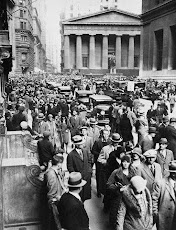
Despite the well intended scholars, or the hopeful politicians, this time is not different -- we will not avoid a crime wave -- rather it will get a lot worse before it gets better as we went so much further down the economic roller coaster, and we have yet to pull up. Furthermore, it is dangerous anytime someone suggests that somehow this time is different. This logic allows city officials to lay-off police at the same time that the conditions for crime are brewing. It must be remembered that it was not until 1933, some four years after the 1929 stock market crash, that the public was so greatly outraged by crime that something was done about it. Murder, extortion, kidnapping, racketeering, bank robberies, and many other crimes were the seminal markers of crime wave during the Great Depression era.

Consider now what is happening in our nations cities. Each is different, unique, and yet all are suffering from new conditions. The streets are getting meaner. Consider the recent press conference held Monday (yesterday) that marked the first time city leaders have spoken publicly to discuss the crime wave, responding to the continuing violence and rising anxiety in the city. New Haven Police Department Chief Frank Limon, who was sworn in just last week, said he will work on strategies for his “Operation Corridor” policing campaign, which was just launched this weekend and increased police presence in the area where the recent murders occurred. In the past four months, there have been 17 homicides, 15 of which involved firearms, Limon said. Most of the victims were in their late 20s or 30s and were recently released from prison. All were black, and this is most troubling as only 12% of the city population is African American, so this is intensely located in specific demographic areas, but it impacts the whole city.

New Haven is a densely populated city of 160,000 located along I-95 on the easter n seaboard. The city is comprised of a 19 square mile area.


Is there something going on in New Haven? In past economic crises, such as the Great Depression, criminal organizations were more violent to each other seeking to take away turf and restore profits. Perhaps times are not so different on the mean streets where it is believed that the victims and shooters are somehow gang related.


Saturday, April 3, 2010

Crime Wave Alert - Bahamas

Coming & Going: Violent crime is up in the Bahamas


Sunday, March 14, 2010

The Washington Post

Crime wave

Bahamas-bound travelers, beware.

Crime in the popular tourist destination is on the upswing, especially on New Providence Island, where the capital city, Nassau, is located. And we're not talking just petty thefts or purse-snatching, but far more serious violent crime.

This island nation finished 2009 with a record 87 murders -- a statistic tourism officials probably won't be trumpeting in their next "It's Better in the Bahamas" ad.

More recently, on Feb. 25, an American tourist was attacked in his hotel room on usually tranquil Harbour Island (60 miles from Nassau) by two men wielding a cutlass, according to the Tribune newspaper. The victim survived and suspects are in custody, but the incident prompted police and Ministry of Tourism officials to meet with concerned Harbour Island residents last Monday.

Bahamian officials from Prime Minister Hubert Ingraham on down have publicly acknowledged the problem and taken steps to address it, putting more police on the streets in Nassau, especially after 18 cruise ship passengers became victims of an armed robbery in November.

The criminal activity has prompted the operators of the world's largest cruise ship, Oasis of the Seas, to warn its passengers to "be mindful of their personal safety," the Nassau Guardian newspaper reported.

CoGo isn't waving sun-seekers away from the Bahamas, because most of the violent crime seems to have occurred in New Providence's "Over the Hill" neighborhoods,where few tourists venture. Would-be tourists should also know that crime hasn't been as much of an issue in the Bahamas' less populated Family Islands, such as Exuma, Bimini and Abaco.

Even so, "be mindful" seems like an appropriate mantra for visitors, especially in Nassau, where the State Department has reported "assaults, including sexual assaults, in diverse areas such as in casinos, outside hotels, or on cruise ships."

Some Bahamians attribute the crime wave to high unemployment (hovering around 15 percent on New Providence Island, according to the Guardian) and the nation's status as a gathering spot for drug traffickers.

On a personal note, CoGo saw no evidence of criminal activity during a recent three-day stay in Nassau, if you discount the scruffy young man who whispered "coke, weed, coke, weed" as we strolled along Bay Street, the main shopping drag, one evening.

For more on this article, click the hyperlink above.

Middle Class Customers increasing Shoplifting Behaviors

10th November, 2009

Middle-class turning to shoplifting

Affluent shoppers hit by the recession are fuelling a shoplifting crimewave, according to research.

Middle-class people reluctant to give up luxuries they can no longer afford are behind thefts of expensive foods, alcohol and cosmetics, the Centre for Retail Research data claimed.

More middle-class people are shoplifting, a report suggests

Hundreds of retailers said shoplifting surged as goods were taken for personal use and not for resale by organised criminal gangs.

Shoplifting shot up by a fifth in the 12 months to June, leaving shops to pick up a £4.88 billion bill for lost stock.

The data was compiled from 42,000 shops across Europe by the Centre for Retail Research on behalf of Checkpoint Systems, a retail security company.

Britain registered the highest rate of shoplifting in Europe and only the United States and Japan had higher levels worldwide.

Neil Matthews, of Checkpoint Systems, said: "We are seeing more instances of amateur thieves stealing goods for their own personal use rather than to sell on than before. This is epitomised in the recent uprising of the middle-class shoplifter, someone who has turned to theft to sustain their standard of living.

"This is driving theft of items such as cosmetics, perfumes and face creams, alcohol, fresh meat, mobile phones, computer games and DVDs as well as small electrical goods like cameras, iPods and personal care gadgets."

Researchers questioned 1,069 large retailers with combined sales of £514 billion for the survey.

ttp://www.retailresearch.org/home/index.php(Centre for Retail Research)

12-year old Juvenile One-Man Crime Wave! (UK)

METRO REPORTER - 16th March, 2010

12-year-old 'crimewave' boy jailed

A violent 12-year-old car thief has become one of the country’s youngest prisoners after a string of more than 30 offences.

The one-boy crimewave was given a ten-month detention sentence after admitting assault and aggravated vehicle taking.

The Essex boy, who is ‘too young and vulnerable’ to be named, had ‘bared his teeth like a wild animal’ when he attacked a woman and a man, magistrates in Witham heard.

After the attack, he stole keys to a red Audi TT, mounting pavements on an erratic drive – only just able to see over the wheel.

Crime opportunity and Craigslist; a match making domain

This summary is not available. Please click here to view the post.

Crime Wave Alert - California

California has been hit with long term unemployment, a terrible housing downturn, and characteristically, these conditions can create conditions of economic misery that can lead to crime waves. Consider the following report:

Loomis Neighborhood Rocked By Crime Wave

More Local News
LOOMIS (CBS13) ― Loomis residents are worried about a rash of burglaries that have swept through their neighborhood.

There have been five car break-ins in just one cul-de-sac over the last two weeks. Homeowners are taking safety into their own hands. They're forming a neighborhood watch, installing alarms, cameras, lights, and patrolling the streets looking for anything suspicious.

"They've taken away that feeling of security and small town safety," said Diane, a Loomis resident.

"Hey, were not immune to problems Loomis is a nice town, but crime is coming to us," said Bob Peugh, a burglary victim.

Neighbors were told these break-ins may be linked to waves of crime in Elk Grove, Rocklin, Granite Bay, and Napa Valley.

Not everyone believes a crime wave is coming; certainly not the FBI or selective police chiefs

While this blog's author believes that a global crime wave is inevitable, and has published this blog to provide a voice of warning, caution, and preparedness, not everyone agrees with this scenario.

The FBI and selective police chiefs site lower crime rates since the recession began. Referenced in this article appearing in the Atlanta Journal and Constitution, one scholar believes that perhaps one reason the crime wave has not hit is the impact of exogenous factors such as the stimulus plan that moved to lengthen the term of benefits for unemployed (meaning increased social insurance) and additional jobs replacing some of the lost jobs during this period. And there is some merit in this argument. The question remains however, can placing a thumb in the hole spring in the dike hold back the raging flood waters?

Read below an excerpt from the AJC:

Across the nation, crime, on the whole, is down considerably, especially property crimes and violent crimes such as robbery.

The counterintuitive nature of this recession makes sense when you peel back the layers.

Take home burglaries, for instance.

“We assume crime climbs when the economy is down,” said Rosenfeld, Curators Professor of Criminology and Criminal Justice at the University of Missouri in St. Louis. But “during high unemployment, more people are at home and that cuts the rates of burglary.”

Additionally, people tend to carry fewer valuables these days, so there are fewer street crimes such as robberies, Rosenfeld added.

The drug trade, which usually grows and flourishes in a recession, has been contained mostly within the groups of people who were already buying and selling drugs. In the past, disputes over drug deals often resulted in murders or other violent crimes. Now, they’re contained and rarely reported. After all, who’s going to go to the police about a drug deal gone bad?

“The absence of expansion in the drug market could be related to the absences of crime increasing,” Rosenfeld said.

Add last year’s stimulus money, which extended unemployment benefits and food stamps to millions and helped many communities keep more police on the street, and you get a clearer picture.

“That may have cushioned the low-income against the full effects of the economic downturn,” Rosenfeld said.

# # #

For my part, I am quite confidant that in the annals of history that this extraordinary period of economic calamity will indeed foster conditions that will incubate a crime wave born of economic misery from long-term sustained unemployment, loss of income, loss of purchasing power (through devalued real estate) and a portent of inflation on the horizon.